Trending SaaS Ideas for 2026 (What's Actually Growing)
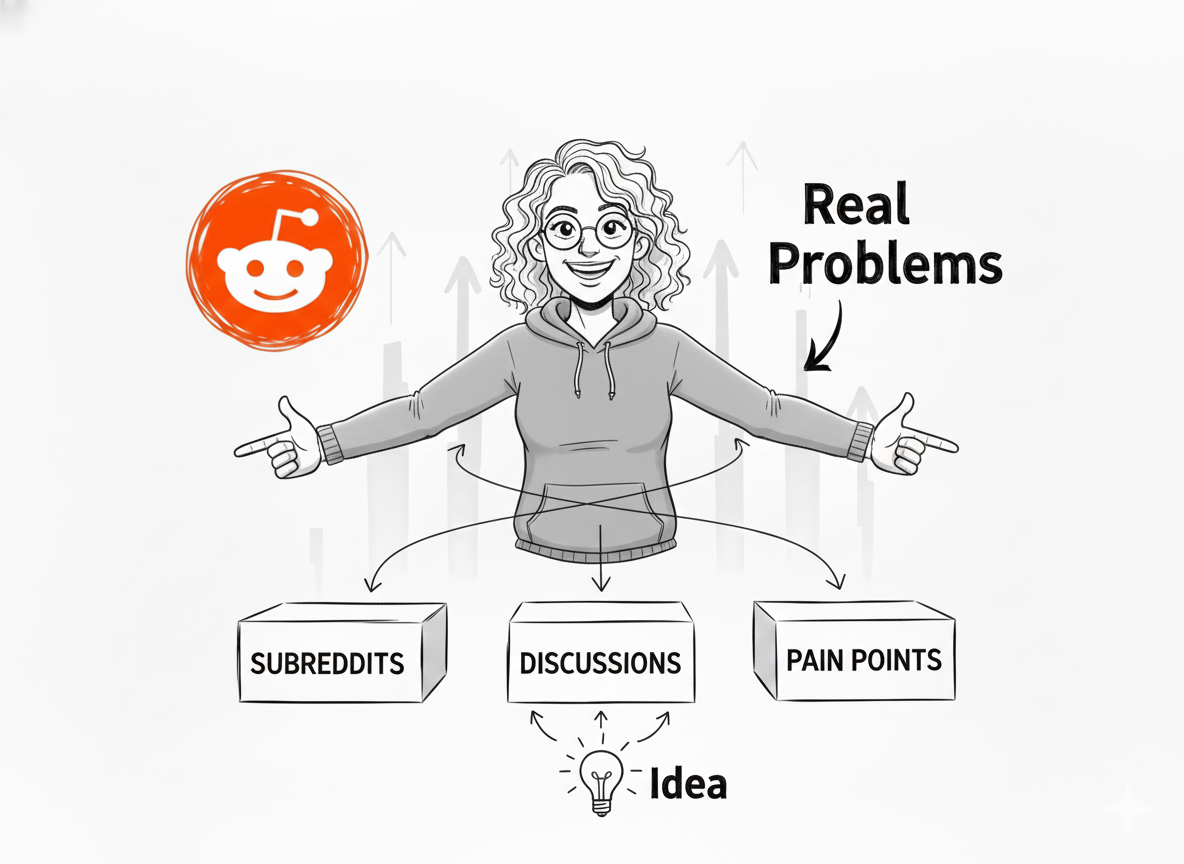
Every year, dozens of "trending SaaS ideas" articles get published. Most of them are recycled lists from the previous year with the date swapped out. They tell you to build a "CRM for X" or an "AI-powered Y" without showing a single data point to prove that anyone actually needs it.
This article is different. We track 2,400+ startups with verified revenue data and have analyzed 148,000+ real complaints across Reddit, G2, Capterra, and app store reviews. Every trend, every growth number, and every idea in this guide comes from our database, not guesswork, not vibes, not what ChatGPT thinks is popular.
Whether you are looking for trending micro SaaS ideas or scouting the next big vertical, this is what the data actually says about where SaaS is heading in 2026.
Key takeaways
- The fastest growing SaaS category for 2026 is Recruiting & HR at 101% average growth, ahead of AI tools (99.9%) and Developer Tools (90.6%), based on 7,880 startups with revenue data.
- The highest-revenue trending niche is Content Creation at $15,921 average MRR, but most SaaS stays small: median MRR is about $136 and micro SaaS typically earns $1K to $50K MRR.
- AI tools grow fast but are crowded with 5,001 funded AI companies and 1,665 AI/automation opportunities tracked, so the winning move is applying AI to a specific vertical, not building another wrapper.
- Every idea here is drawn from 3,000+ validated SaaS opportunities across 690+ software categories and 1M+ real user complaints.
- Validate before building: score your pick with the free business idea evaluator.
Stop guessing what's trending. See the data for yourself.
BigIdeasDB tracks 2,400+ startups with real revenue data and analyzes 148,000+ complaints to surface the SaaS ideas that are actually growing. Our revenue intelligence tool shows you growth rates, competitive density, and validated demand signals, so you build what the market actually wants.
Explore Trending IdeasHow We Identify Trending SaaS Ideas
"Trending" is a meaningless word unless you define what you are measuring. We use four independent signals to determine which SaaS ideas are actually gaining momentum in 2026:
1. Startup Growth Rates
We track the month-over-month revenue growth of 2,400+ startups across 30+ categories. When an entire category shows sustained growth above 50%, that is a trend signal. When individual startups within a category are growing at 100%+, that is a strong trend signal. Our revenue intelligence dashboard makes this data searchable and sortable.
2. Product Hunt Launch Velocity
Product Hunt is the canary in the coal mine for SaaS trends. When multiple products in the same category launch within weeks of each other and receive strong upvotes, that signals builder momentum. Recent top launches include Stitch 2.0 by Google (739 votes), Tobira.ai (616 votes), ProductBridge (591 votes), and Zoer.ai (505 votes), all pointing to developer tools and AI-assisted workflows as hot categories.
3. Complaint Velocity
We analyze 148,000+ complaints across Reddit, G2, Capterra, and app store reviews. When complaints about a specific problem accelerate, with more people complaining more frequently about the same pain point, that is demand waiting to be captured. This is the foundation of our idea discovery engine.
4. Upwork Demand Patterns
When businesses repeatedly hire freelancers to solve the same problem manually, that is a SaaS opportunity hiding in plain sight. We monitor Upwork job postings to identify recurring manual workflows that could be automated with software. If someone is paying $50/hr for a task that software could handle, there is a product waiting to be built.
The Fastest Growing SaaS Categories in 2026
Here is what the data says. These are the fastest growing SaaS categories based on average revenue growth across tracked startups:
| Category | Avg Growth | Startups Tracked | Avg MRR |
|---|---|---|---|
| Recruiting & HR | 101% | 74 | $2,841 |
| AI Tools | 99.9% | 1,213 | $1,700 |
| Developer Tools | 90.6% | 332 | $2,450 |
| Entertainment | 86% | 89 | $1,920 |
| Productivity | 80% | 205 | $2,100 |
| Content Creation | 72% | 156 | $15,921 |
| Sales | 68% | 52 | $6,091 |
| Analytics | 64% | 118 | $3,066 |
| E-commerce | 61% | 97 | $3,252 |
Notice the gap between growth rate and revenue. Recruiting & HR is growing fastest at 101%, but Content Creation has the highest average MRR at $15,921. The smartest founders look at both metrics. A category with high growth and high revenue per startup is where the real opportunity lives. Categories with high growth but low revenue per startup (like generic AI tools) are often a race to the bottom.
12 Trending SaaS Ideas for 2026
These are not speculative ideas. Each one is backed by growth data, complaint signals, or validated demand from our database. For more SaaS ideas backed by real pain points, explore our full database.
1. Automated Reporting Dashboards for SMBs
"I spend 6 hours every Monday morning pulling data from five different tools into a spreadsheet for my boss."
Problem: Small businesses use dozens of SaaS tools but have no unified reporting. Managers waste hours assembling manual reports from Stripe, Google Analytics, HubSpot, and spreadsheets. Trend signal: This is the #1 validated idea on our swiper with a 33.3% approval rate from real founders. Analytics tools are growing at 64% with $3,066 average MRR. The pain is universal and the willingness to pay is proven.
2. AI-Powered Employee Training & Onboarding Platforms
"We hired three people last month and each one got a completely different onboarding experience because nobody documented the process."
Problem: Employee onboarding is inconsistent, expensive, and mostly manual at companies under 200 people. Documentation is scattered and training takes weeks. Trend signal: Training/Onboarding ideas have a 32.6% swiper approval rate, making it the #2 validated idea in our database. Recruiting & HR is the fastest growing category at 101%. This is a category where AI genuinely adds value: generating personalized training paths from existing company docs.
3. Real-Time Employee Feedback Tools
"Our annual review process is a joke. By the time feedback reaches anyone, the project shipped six months ago."
Problem: Annual performance reviews are outdated but most companies still rely on them. Managers need lightweight, continuous feedback tools that integrate with Slack and Teams. Trend signal: Employee Feedback has a 31.4% swiper approval rate (#3 validated). The HR category is growing at 101% and the need for real-time feedback has accelerated with remote work becoming permanent.
4. Niche Content Creation Tools for Specific Formats
"I need a tool that generates LinkedIn carousel posts, not another generic AI writer."
Problem: Generic AI writing tools are everywhere but format-specific content tools are rare. Creators need specialized tools for carousels, newsletters, video scripts, and podcast show notes. Trend signal: Content Creation has the highest average MRR of any category at $15,921. The key is going narrow: pick one content format and own it. Broad AI writing tools are the ones struggling (see the "declining" section below).
5. Developer Experience (DX) Monitoring Tools
"Our build times went from 2 minutes to 15 minutes and nobody noticed until half the team was complaining on Slack."
Problem: Engineering teams track uptime and errors but rarely measure developer productivity signals like build times, CI/CD bottlenecks, or code review latency. Trend signal: Developer Tools is growing at 90.6% across 332 tracked startups. Product Hunt data shows strong builder interest with launches like Stitch 2.0 by Google pulling 739 votes. This is a category where technical founders have a natural edge.
6. Vertical Sales Automation for Niche Industries
"I tried HubSpot, Pipedrive, and Close. None of them understand how insurance sales actually works."
Problem: Generic CRMs force every industry into the same workflow. Insurance brokers, real estate agents, and B2B manufacturers all have unique sales processes that horizontal tools handle poorly. Trend signal: Sales tools average $6,091 MRR with only 52 tracked startups, that is high revenue with low competition. For more ideas in this space, see our B2B business ideas guide.
7. AI-Assisted Recruiting Screening Tools
"We got 400 applications for one senior dev role. I physically cannot read all of them."
Problem: Hiring managers drown in applications. Existing ATS tools are clunky and the AI features in legacy platforms are bolted on, not built in. Trend signal: Recruiting & HR is the #1 fastest growing category at 101% average growth. Application volumes have increased dramatically due to AI-generated resumes, creating even more demand for smart screening tools. This is where AI adds genuine value rather than being a gimmick.
8. Compliance Monitoring for Startups
"We just found out we were violating GDPR for two years because nobody was tracking our data processing agreements."
Problem: Startups grow fast and compliance falls through the cracks. SOC 2, GDPR, HIPAA, and state-specific regulations are complex, and most small companies cannot afford a dedicated compliance team. Trend signal: Regulatory complexity keeps increasing. E-commerce tools ($3,252 avg MRR) and analytics tools ($3,066 avg MRR) both intersect with compliance needs. This is a "boring but profitable" niche, exactly the kind our niche SaaS ideas guide recommends targeting.
9. Micro SaaS for Freelancer Workflow Automation
"I spend more time on invoicing, contracts, and client communication than on actual design work."
Problem: Freelancers cobble together 5-10 tools to manage their business: invoicing, contracts, scheduling, time tracking, and client portals. Each one costs $10-30/month and none of them talk to each other. Trend signal: Productivity tools are growing at 80% and freelancer populations keep expanding. For more ideas in this space, see our micro SaaS ideas for 2026 guide.
10. E-commerce Returns Management Platforms
"Returns are eating 20% of our margin and we have zero visibility into why products are coming back."
Problem: E-commerce brands track every metric except returns analytics. They know their CAC, LTV, and ROAS but have no idea which products get returned most, why, or how to prevent it. Trend signal: E-commerce tools average $3,252 MRR and returns are a growing pain point as DTC brands scale. This is a SaaS product idea with clear revenue potential and low competition.
11. AI Meeting Intelligence Beyond Transcription
"I have transcripts from 200 customer calls but no way to find patterns or extract action items at scale."
Problem: Meeting transcription is solved. What is not solved is extracting structured insights from those transcripts: competitive intel from sales calls, feature requests from customer success meetings, or risk signals from investor updates. Trend signal: AI tools are growing at 99.9% but the opportunity here is the analysis layer on top of existing transcription tools, not another transcription product. Vertical meeting intelligence (just for sales teams, just for product teams) is where the revenue lives.
12. Workflow Automation for Small Accounting Firms
"Tax season nearly killed us this year. We need automation but everything on the market is built for Big 4 firms."
Problem: Small accounting firms (5-50 people) are stuck between consumer tools like QuickBooks and enterprise platforms like Thomson Reuters. They need workflow automation for client onboarding, document collection, and deadline tracking that is sized for their needs. Trend signal: This is a classic "boring industry, outdated software" opportunity. Productivity tools grow at 80% and the average accounting firm is willing to pay $200-500/month for tools that save billable hours. For more B2B ideas, see our dedicated guide.
What's Declining (Categories to Avoid)
Not every fast-growing category is a good bet. Here is what the data warns against:
Generic AI Wrapper Tools
Yes, AI tools show 99.9% growth. But with 1,213 tracked startups in the category, it is absurdly crowded. The median MRR for generic AI tools is just $7, meaning most AI wrappers make essentially nothing. The ones that succeed are vertically focused (AI for recruiting, AI for content, AI for compliance). If your pitch starts with "it is like ChatGPT but for..." and you cannot finish that sentence with a specific, painful use case, the data says you will likely end up in the $7 median.
Another Project Management Tool
The project management space is one of the most saturated categories in SaaS. Unless you are targeting a very specific vertical (project management for construction firms, for event planners, for academic research teams), the broad market is locked up by Asana, Monday, Linear, and Notion. Our complaint data shows low complaint velocity in this space, meaning users are not screaming for alternatives.
Social Media Scheduling Tools
Buffer, Hootsuite, Later, Sprout Social, and dozens more have this market thoroughly covered. Complaint velocity is low and switching costs are minimal. Unless you have a genuinely novel angle (scheduling for a platform that does not have good tooling yet), this is a category where new entrants struggle to gain traction.
Find your next SaaS idea with real data, not guesswork.
BigIdeasDB is the only AI-powered suite of tools designed to help you research, validate, and build products people actually want. Explore our validation tool to swipe on real opportunities, or use our revenue intelligence dashboard to see growth rates and revenue data for 2,400+ tracked startups.
Start Exploring FreeFrequently Asked Questions
What are the fastest growing SaaS categories in 2026?
Based on our tracking of 2,400+ startups, the fastest growing SaaS categories in 2026 are Recruiting & HR (101% average growth, 74 startups), AI tools (99.9% growth, 1,213 startups), Developer Tools (90.6% growth, 332 startups), Entertainment (86% growth), and Productivity (80% growth). However, growth rate alone does not tell the full story. You need to cross-reference with revenue data and competition levels.
What trending SaaS ideas have the highest revenue potential?
The highest-revenue SaaS categories in 2026 are Content Creation ($15,921 average MRR), Sales tools ($6,091 average MRR), E-commerce ($3,252 average MRR), and Analytics ($3,066 average MRR). These categories combine strong demand with willingness to pay, making them ideal for founders looking for trending ideas with real revenue upside.
How do you identify trending SaaS ideas with real data?
We use four signals: startup growth rates tracked across 2,400+ companies, Product Hunt launch velocity and vote counts, complaint velocity from 148,000+ analyzed complaints across Reddit, G2, Capterra, and app stores, and Upwork demand patterns showing what businesses are already paying freelancers to solve. BigIdeasDB combines all four signals into a single platform.
Are AI SaaS tools still trending in 2026?
AI tools show 99.9% average growth but the category is extremely crowded with 1,213 tracked startups. The median MRR for generic AI tools is just $7, meaning most make almost nothing. The trending opportunity is not building another AI wrapper but applying AI to specific verticals like recruiting, compliance, or content creation where the revenue per startup is dramatically higher.
What is the best way to validate a trending SaaS idea?
Start with complaint data: look for problems with at least 20 independent complaints across platforms like Reddit, G2, and Capterra. Then check Product Hunt for recent launches in the space to gauge momentum. Finally, verify willingness to pay by looking at Upwork job postings and existing tool pricing. BigIdeasDB provides swipe-based validation where real founders rate opportunities, with top-validated ideas like Automated Reporting Dashboards showing 33.3% approval rates.
The SaaS landscape changes fast, but the fundamentals do not: find a real problem, verify that people will pay to solve it, and build something focused. The 12 ideas above are not predictions, they are reflections of what is already growing in the data.
For more data-backed ideas, explore our guides on micro SaaS ideas for 2026, SaaS ideas backed by pain points, niche SaaS ideas, and SaaS product ideas for 2026. Or skip the reading and go straight to BigIdeasDB to explore trending opportunities with real revenue data.
Related: dig into niche SaaS ideas in real estate and healthcare, browse niche SaaS opportunities by industry, spin up fresh concepts with the free business idea generator, or rate my idea before you commit a single line of code. And before you chase a trend, check which SaaS companies are actually growing on revenue rather than funding headlines.
BigIdeasDB Research. (2026). Trending SaaS Ideas for 2026 (What's Actually Growing). BigIdeasDB. Retrieved from https://bigideasdb.com/trending-saas-ideas-2026