How to Get Your First 100 SaaS Users (2026 Guide)
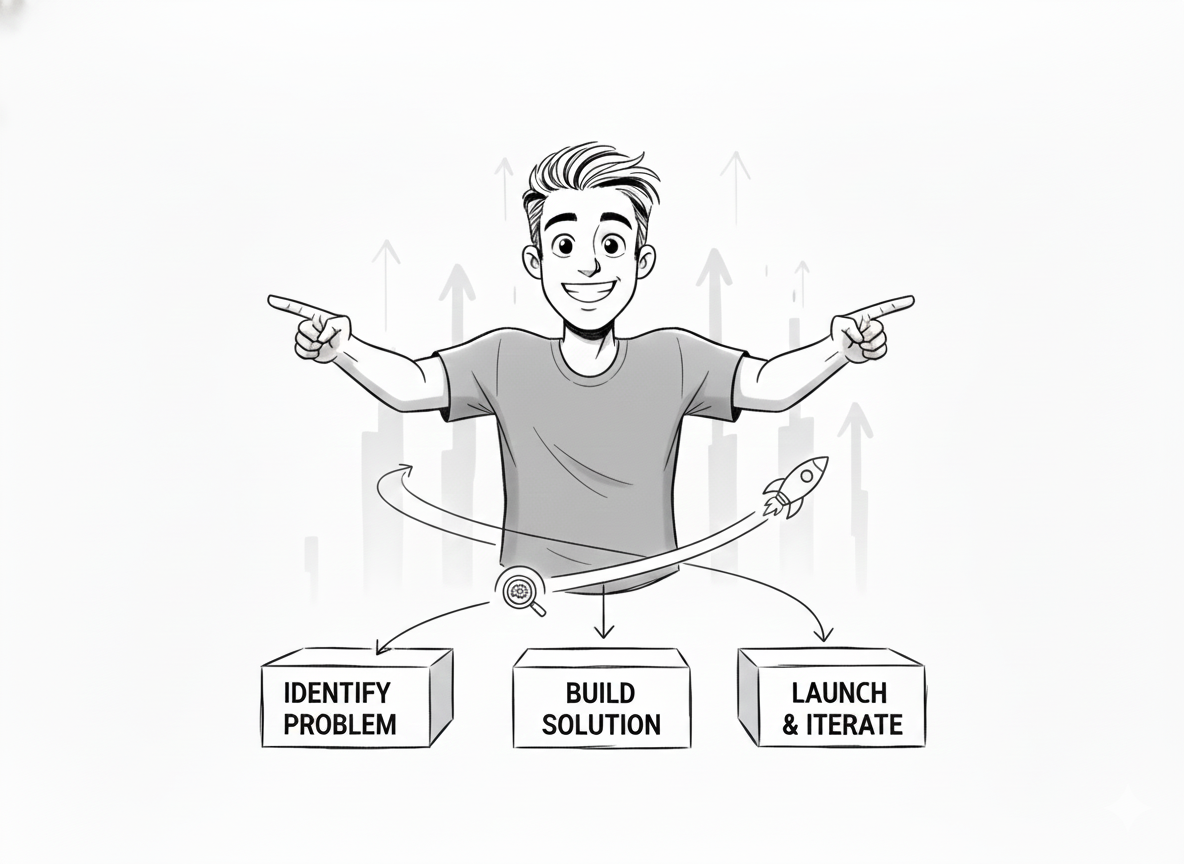
Most founders' first product dies in silence. Not because it's bad. Not because the market doesn't exist. It dies because nobody finds it. One anonymous r/SaaS poster put it perfectly: "The first person who visited spent 11 seconds and left." That single sentence captures the reality of launching a SaaS into the void without a distribution plan.
We analyzed data from 4,500+ product launches in BigIdeasDB's Product Hunt database and 1M+ complaints across the platform to understand what separates founders who reach 100 users from those who never get past single digits. The answer is not "build a better product." The answer is distribution. Relentless, creative, unsexy distribution.
This guide gives you six battle-tested strategies that real founders used to get their first 100 users — and two things you should absolutely avoid. If you are still searching for what to build, start with our guide on how to find business ideas on Reddit or explore how to hit your first $1K MRR with a micro-SaaS side project. If you already have a product and need users, keep reading.
Table of Contents
Why the First 100 Users Are the Hardest
Your first 100 users are harder than the next 1,000. This is not motivational fluff — it is a structural reality of how SaaS distribution works. Before you have users, you have no social proof, no reviews, no word-of-mouth, no SEO authority, and no data to optimize your funnel. You are selling an unknown product from an unknown brand to people who have no reason to trust you.
The compounding effects that make SaaS powerful — referrals, organic search, network effects — all require a base of existing users to kick in. Getting to 100 users is the act of building that base from nothing. It requires manual, unscalable effort. Every founder who has done it will tell you the same thing: the first users came from direct, personal interactions. Not from ads. Not from viral tweets. From conversations.
There is also a psychological barrier. As one Reddit founder shared: "The first person who visited spent 11 seconds and left." Those early metrics are brutal. Your bounce rate will be high. Your conversion rate will be low. Your landing page copy will not resonate because you have not yet learned your users' language. That is normal. The founders who reach 100 users are the ones who treat every rejection as data, not as defeat.
"I rewrote my landing page in the exact words my users used. Conversion went from 2% to 11% overnight." — Anonymized r/SaaS founder
The lesson: your first 100 users are not just customers. They are your research team. They teach you how to talk about your product, who actually needs it, and what features matter. If you approach this phase as a marketing problem, you will fail. Approach it as a learning problem and you will build the foundation for everything that comes after.
Strategy 1: Reddit and Community Engagement
Reddit is the single most underrated acquisition channel for early-stage SaaS. It is also the most misunderstood. Most founders treat Reddit like a billboard: they drop a link, get downvoted, and conclude that Reddit does not work. That is not Reddit failing. That is spam failing.
The founders who succeed on Reddit do something different. They become genuine members of the communities where their users hang out. They answer questions. They share insights. They help people solve problems — and only mention their product when it is genuinely relevant. One anonymized founder on r/SaaS reported a staggering result:
"40% conversion from genuine helpful replies vs 0% from $500 in ads." — Anonymized r/SaaS founder
That is not a typo. Genuine, helpful engagement crushed paid acquisition by an infinite margin. Here is how to replicate this:
The Reddit Engagement Playbook
- Identify 5-10 subreddits where your target users already ask questions. For B2B SaaS, think r/SaaS, r/startups, r/Entrepreneur, r/smallbusiness, and niche-specific subreddits related to your vertical.
- Spend 2 weeks helping before promoting. Answer questions, share frameworks, provide value. Build karma and reputation first.
- When someone describes a problem your product solves, reply with a detailed solution and mention your tool as one of several options. Never make it the only recommendation.
- Create "launch" posts that lead with the problem, not the product. "I was frustrated by X, so I built Y" performs 10x better than "Check out my new SaaS."
- Track which threads drive signups using UTM parameters so you can double down on what works.
BigIdeasDB makes this process faster by letting you build Reddit pipelines that surface the exact conversations where people are complaining about the problem your product solves. Instead of manually scrolling through subreddits, you can search across 1M+ complaints and find your ideal threads in seconds. You can also use our Reddit idea validation tools to confirm demand before you invest time in a community.
Strategy 2: The Directory Blitz
In your first week after launch, submit your product to 30-50 startup directories. This is not glamorous work. It is repetitive, tedious, and unsexy. It is also one of the highest ROI activities you can do in the early days, for two reasons: direct traffic and backlinks.
Each directory listing creates a backlink to your site. After 30-50 listings, you have 30-50 backlinks from legitimate domains. This tells Google your site is real, which accelerates your organic search ranking. Some founders report that directory listings alone drove 500-2,000 visitors in their first month.
The Directory Hit List
Start with the high-impact directories and work your way down. For a comprehensive list of where to launch, check our guide to where to launch your startup in 2026. Here are the essentials:
- Tier 1 (launch day): Product Hunt, Hacker News (Show HN), BetaList, Indie Hackers
- Tier 2 (week 1): SaaSHub, AlternativeTo, Uneed, ToolPilot, SaaS Worthy, Launching Next, Beta Console, StartupBase
- Tier 3 (week 1-2): Capterra, G2, GetApp, Software Advice, Crunchbase, AngelList, F6S, and niche-specific directories for your vertical
- Tier 4 (ongoing): Reddit launch posts, relevant Facebook groups, Discord communities, Slack communities
BigIdeasDB tracks 4,500+ product launches in our Product Hunt database. We have seen which types of products gain traction on which directories. A developer tool will perform very differently on Product Hunt versus Capterra. Match your product to the directory audience, not just the directory size.
Pro tip: Create a spreadsheet tracking every directory submission with the date, status, and resulting traffic. This becomes your acquisition playbook for future launches.
Find where your competitors launched and which directories drive real traffic. Search 4,500+ product launches and 1M+ complaints on BigIdeasDB
Strategy 3: Build in Public on Twitter/X
Building in public means sharing your journey — the wins, the failures, the metrics, the decisions — as you build your SaaS. Twitter/X has become the default platform for this because the indie hacker and SaaS community there is enormous and highly engaged.
The power of building in public is not virality. It is trust. When people watch you struggle, iterate, and improve over weeks or months, they develop a relationship with you and your product. By the time you launch, you have an audience of people who feel invested in your success. Many of them will become your first users, not because your product is perfect, but because they have been rooting for you.
What to Share
- Weekly revenue updates (even when revenue is $0 — transparency builds credibility)
- Technical decisions and the reasoning behind them (what stack you chose and why)
- User feedback and how you responded to it (screenshots of conversations work well)
- Mistakes and failures — these consistently outperform success posts in engagement
- Before/after screenshots of your product as it evolves
- Specific numbers: visitors, signups, conversion rates, churn. The more specific, the more engaging.
The key mistake founders make with build-in-public is treating it like a marketing channel instead of a documentation habit. Do not write threads optimized for likes. Write honest updates about what is happening. Authenticity scales better than clickbait in this community. If you are bootstrapping, our guide on bootstrapping a company in 2026 covers how to pair build-in-public with lean operations.
Strategy 4: Cold Outreach That Does Not Feel Cold
Cold outreach has a terrible reputation because most people do it terribly. The generic "Hey, I built this thing, check it out" email gets deleted instantly. But cold outreach done well — personalized, relevant, and genuinely helpful — is one of the fastest paths to your first 100 users.
The secret is to make your outreach feel warm. That means doing research before you send a single message. Here is the framework that consistently works for early-stage SaaS:
The Warm Cold Outreach Framework
- Step 1: Find people who already have the problem. Search Reddit, Twitter, forums, and review sites for people complaining about the exact problem your product solves. BigIdeasDB's customer discovery tools can surface these complaints automatically.
- Step 2: Help them first. Reply to their post or comment with genuine advice. Solve part of their problem for free. Do not mention your product yet.
- Step 3: Follow up via DM. After helping publicly, send a short DM: "Hey, I saw your post about [problem]. I actually built a tool that automates this. Would you like to try it free for 30 days? No strings."
- Step 4: Ask for feedback, not money. Your first users are beta testers. Frame it as "I would love your feedback" rather than "Buy my product." This removes friction and makes people feel valued.
This approach works because you are not selling. You are helping someone who already has a problem and then offering a solution. The conversion rate on this type of outreach is dramatically higher than spray-and-pray cold emails. Aim for 10-20 personalized outreach messages per day. At a 15-20% conversion rate, that is 2-4 new users daily. In a month, you are past 60 users from this channel alone.
Strategy 5: Leverage Existing Audiences
Building your own audience takes months. Borrowing someone else's audience takes a single conversation. This is one of the most underused strategies for early SaaS growth, and it is available to every founder regardless of budget.
Guest Posts and Content Collaborations
Find blogs, newsletters, and publications that your target users already read. Pitch a guest article that provides genuine value — not a product review, but an educational piece that naturally references your tool. One well-placed guest post on a blog with 10,000 monthly readers can drive 200-500 visitors and 20-50 signups.
Podcast Appearances
Micro-podcasts (500-5,000 listeners) in your niche are surprisingly easy to get on. Hosts are always looking for guests with interesting stories. If you have a founder journey — even if you are pre-revenue — that is a story worth telling. The conversion from podcast listeners to signups is lower than direct channels, but the trust level is much higher. Podcast users tend to be stickier and higher LTV.
Strategic Partnerships
Find non-competing products that serve the same audience and propose cross-promotions. If you built a SaaS for freelance designers, partner with a project management tool, an invoicing tool, or a portfolio platform. Offer their users a discount on your product in exchange for a mention in their newsletter or onboarding flow. These partnerships can deliver 50-200 highly qualified users in a single week.
Strategy 6: Free Tools as Lead Magnets
Build a small, free tool that solves a related problem and requires no signup. Make it genuinely useful. Then place your main product as the logical next step. This strategy works because free tools get shared. They rank in Google for long-tail queries. They build goodwill.
Examples that work well for SaaS:
- Calculators: ROI calculators, pricing calculators, savings estimators related to your product category
- Generators: Email template generators, policy generators, proposal generators — anything your audience needs regularly
- Auditors: Website auditors, SEO checkers, security scanners that identify problems your main product solves
- Templates: Free spreadsheet templates, Notion templates, or document templates that your main product automates
The free tool should take no more than a week to build. Its purpose is not to be a product — it is a top-of-funnel magnet. When someone uses your free calculator and sees value, the upsell to your full product feels natural. This is exactly how many SaaS companies in BigIdeasDB's database grew their early user base before they had any SEO authority or brand recognition.
This guide focuses on the first 100 SaaS users specifically. For the zero-to-one moment, read how to get your first customer, and for the repeatable acquisition that comes after, see how to get customers for a startup. If you're still building, our data-backed guide to building a SaaS shows how to line up customers before you ship.
Not sure what to build? Search real user complaints across Reddit, G2, Capterra, and app stores. Find validated problems waiting for solutions on BigIdeasDB
What NOT to Do
Knowing what to avoid is just as important as knowing what to do. These are the two most common mistakes that waste founders' time and money during the first 100 users phase.
Premature Google Ads and Paid Acquisition
Running Google Ads before you have product-market fit is like pouring gasoline on a pile of wet wood. The fire will not start no matter how much fuel you add. Paid acquisition requires three things you do not have at the start: a proven conversion funnel, a known customer acquisition cost, and messaging that resonates. Without these, you will burn through $500-2,000 getting maybe 5 signups, most of whom will churn in the first week.
Save paid ads for after you hit 100-200 users. By then, you will know your ideal customer profile, your best landing page copy, and your actual conversion rates. Ads become a multiplier, not a discovery mechanism.
Generic Social Media Posts
Posting "Just launched my SaaS! Check it out" on LinkedIn, Twitter, and Facebook is the digital equivalent of shouting into a void. Generic launch posts get generic results: a few likes from friends and zero signups from strangers. Every social post needs to do one of three things: teach something specific, share a real result, or tell a compelling story. If your post does none of these, do not publish it.
The same applies to generic "We're live on Product Hunt, please upvote!" messages. If the only thing you can say about your product is that it exists, you have a positioning problem, not a marketing problem. Go back to your users, learn their language, and rewrite everything in their words. As one Reddit founder noted: "I rewrote my landing page in the exact words my users used" — and that single change transformed their conversion rates.
If you want a structured approach to finding your first SaaS customers, start with the people who are already complaining about the problem. They are the easiest to convert because the pain is real and present.
Your first 100 users are asking for solutions on Reddit right now. Linkeddit finds those buying-intent threads so you can show up early with a real answer.
One caution before you spend a month on any channel here: check whether you have a traffic problem at all. In our measurement of 740 revenue-verified companies, roughly half the products with real traffic earn nothing, and 29 of them clear 10,000 monthly visitors with no revenue.How much traffic a SaaS actually needs has the diagnostic.
Frequently Asked Questions
How long does it take to get your first 100 SaaS users?
Most bootstrapped SaaS founders report reaching 100 users within 2-6 months of active marketing. The key word is active. Building the product takes weeks, but distribution takes months. Founders who start marketing before the product is finished consistently reach 100 users faster than those who wait for a perfect launch.
What is the best free channel for early SaaS user acquisition?
Reddit and niche online communities consistently outperform every other free channel for early SaaS acquisition. One anonymized founder on r/SaaS reported a 40% conversion rate from genuine helpful replies compared to 0% from $500 in paid ads. The key is providing real value in discussions, not dropping links.
Should I use paid ads to get my first SaaS users?
No. Paid ads are almost always a waste of money before you have product-market fit. You do not yet know your ideal customer profile, your messaging, or your conversion funnel well enough to make ads profitable. Spend that budget on direct conversations with potential users instead. Ads become effective after your first 100-200 users, once you understand what language converts.
How many startup directories should I submit to at launch?
Aim for 30-50 directories in your first week. This includes Product Hunt, Hacker News, BetaList, Uneed, SaaSHub, AlternativeTo, and dozens of niche-specific directories. Each listing creates a backlink that improves your SEO over time, and collectively they can drive 500-2,000 visitors in your first month. BigIdeasDB tracks 4,500+ product launches to help you identify which directories drive the most traffic.
What is the biggest mistake founders make when trying to get their first users?
Building in silence. The majority of SaaS products that fail never had a distribution problem — they had a visibility problem. Founders spend months perfecting features while telling nobody about the product. The fix is simple: start talking about what you are building from day one, even before you have a landing page. Every conversation is a potential user.
Written by
Om Patel
BigIdeasDB Research. (2026). How to Get Your First 100 SaaS Users (2026 Guide). BigIdeasDB. Retrieved from https://bigideasdb.com/how-to-get-first-100-saas-users