15 Low-Cost Business Ideas With High Profit in 2026 (Backed by Revenue Data)
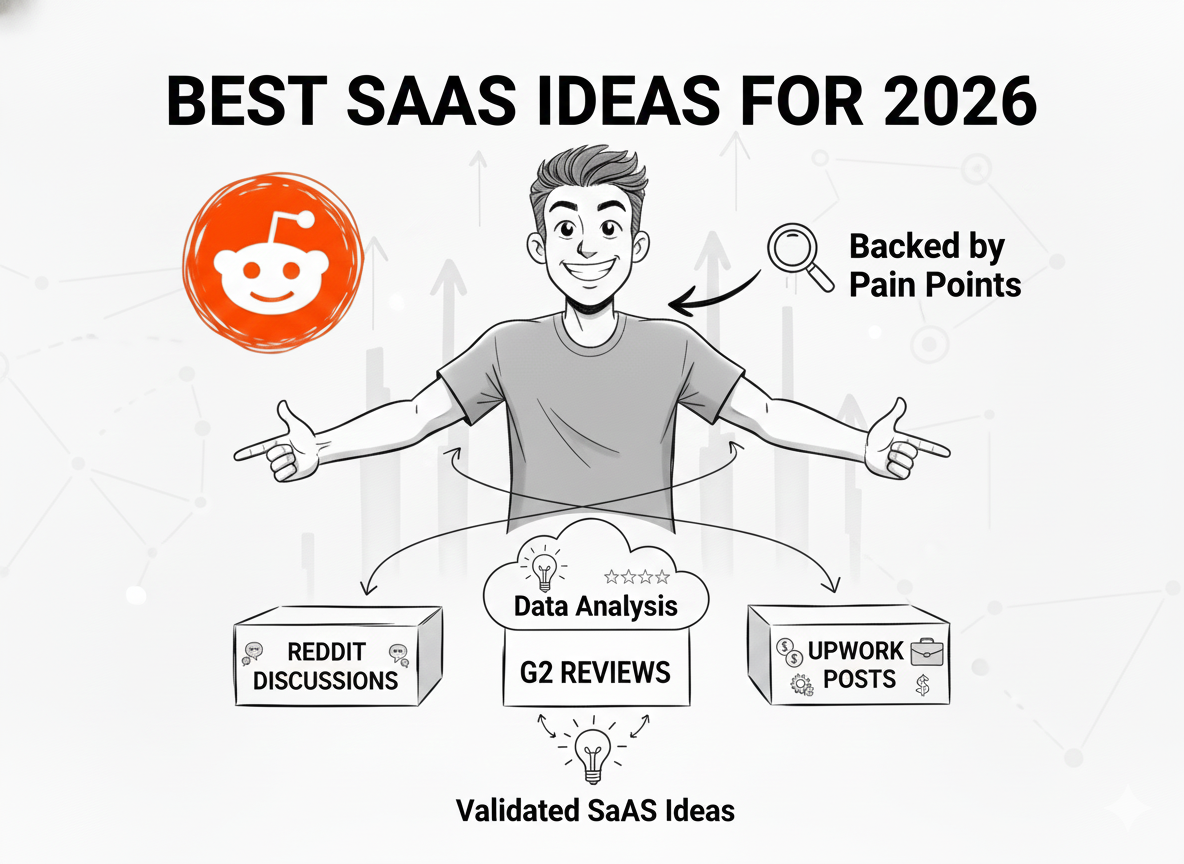
You do not need $50,000 to start a profitable business. We tracked 5,283 real startups and found dozens making $20,000 to $200,000 per month that started with under $500. The secret is not money. It is picking the right problem to solve.
Every idea on this list includes the startup cost, profit margin, and revenue proof from a real company. SaaS and digital businesses dominate because they have 70-90% profit margins with near-zero marginal cost per customer.
How we found these ideas:
- 5,283 startups tracked with verified monthly recurring revenue
- 15,000+ real complaints from Reddit, G2, Capterra, and app stores
- 2,400+ startups with confirmed revenue data analyzed for margins and growth
Table of Contents
- Ideas 1-5: Under $200 to Start
- Ideas 6-10: Under $300 to Start
- Ideas 11-15: Under $500 to Start
- Why Low-Cost Businesses Win
- Frequently Asked Questions
Under $200 to Start (Ideas 1-5)
1. AI SEO Content Tool
What it is: An AI agent that automates keyword research, content writing, and search engine optimization for businesses that need organic traffic.
- Startup cost: $0 to $100
- Revenue proof: SEOBOT generates $82,000 MRR. SEO STACK generates $68,000 MRR. AEO Engine generates $64,000 MRR growing 46%.
- Profit margin: 80 to 90%
- Why margins are high: AI APIs cost pennies per article. Customers pay $50 to $500 per month for unlimited content generation.
2. Social Media Scheduler
What it is: Software for scheduling, publishing, and analyzing social media posts across platforms from a single dashboard.
- Startup cost: $0 to $200
- Revenue proof: Postiz generates $76,000 MRR with 237% growth. One of the fastest-growing categories we track.
- Profit margin: 80 to 90%
- Why margins are high: Social media APIs are free. Infrastructure costs are minimal compared to subscription revenue.
3. AI Video Creator
What it is: Turn text prompts into ready-to-post videos with AI voiceovers, visuals, and edits in minutes.
- Startup cost: $0 to $100
- Revenue proof: Vid.AI generates $92,000 MRR with 6,626 customers. Speel.co hit $66,000 MRR in 3 months with 252% growth.
- Profit margin: 75 to 85%
- Why margins are high: AI video generation costs are dropping rapidly while customers pay premium prices for time saved.
4. LinkedIn Outreach Tool
What it is: Automate LinkedIn messaging, connection requests, and follow-ups with AI personalization for B2B sales teams.
- Startup cost: $0 to $200
- Revenue proof: PROSP generates $128,000 MRR. WaLead AI generates $37,000 MRR growing 40%.
- Profit margin: 80 to 90%
- Why margins are high: LinkedIn automation requires minimal infrastructure. B2B customers pay $100 to $500 per month.
5. AI Resume Builder
What it is: AI-powered resume building, optimization, and job matching tools for job seekers.
- Startup cost: $0 to $100
- Revenue proof: Rezi generates $56,000 MRR with nearly 1 million new users per year.
- Profit margin: 85 to 95%
- Why margins are high: Resume generation uses AI APIs that cost fractions of a penny. Users pay $10 to $30 per month.
Want to find low-cost business ideas backed by real complaints? BigIdeasDB analyzes 15,000+ real pain points so you build what people actually need.
Under $300 to Start (Ideas 6-10)
6. Online Course Platform
What it is: Create, host, and sell online courses with built-in marketing, community features, and payment processing.
- Startup cost: $0 to $500
- Revenue proof: Codedex generates $87,000 MRR teaching Gen Z to code. DataExpert generates $61,000 MRR growing 21%.
- Profit margin: 75 to 90%
- Why margins are high: Course content is created once and sold infinitely. Hosting costs are minimal.
7. Community Platform
What it is: Build and monetize professional communities with courses, live calls, forums, and built-in payments.
- Startup cost: $0 to $200
- Revenue proof: Tribe Social generates $34,000 MRR. Advise.so generates $25,000 MRR as a marketing community.
- Profit margin: 80 to 90%
- Why margins are high: Community software has minimal infrastructure costs. Members pay monthly subscriptions.
8. Habit and Productivity App
What it is: A mobile or web app helping users build habits, track goals, and improve daily productivity with gamification features.
- Startup cost: $0 to $200
- Revenue proof: HabitKit generates $31,000 MRR with a simple, focused habit tracking product.
- Profit margin: 85 to 95%
- Why margins are high: No API costs, minimal server load. Users pay $5 to $15 per month for premium features.
9. Calorie and Nutrition Tracker
What it is: An AI-powered app that tracks calories, macros, and nutrition with photo-based food logging and personalized recommendations.
- Startup cost: $0 to $300
- Revenue proof: CalBuddy generates $23,000 MRR as a calorie tracking app with AI food recognition.
- Profit margin: 80 to 90%
- Why margins are high: Food databases are freely available. AI vision costs are minimal per scan.
10. Reddit Marketing Tool
What it is: Help businesses market on Reddit through content creation, community monitoring, and engagement automation tools.
- Startup cost: $0 to $100
- Revenue proof: Launch Club generates $59,000 MRR with just 79 members paying for Reddit marketing tools.
- Profit margin: 85 to 95%
- Why margins are high: Reddit API is free for basic usage. High revenue per customer ($747 per member).
These revenue numbers are real. BigIdeasDB tracks 5,283 startups with verified MRR data.
Under $500 to Start (Ideas 11-15)
11. AI Sales Agent
What it is: AI that handles inbound inquiries, qualifies leads, and closes deals via chat, SMS, and voice 24/7 for businesses.
- Startup cost: $0 to $500
- Revenue proof: DM Champ generates $180,000 MRR growing 76%. Bookedin generates $56,000 MRR.
- Profit margin: 70 to 85%
- Why margins are high: AI handles conversations at pennies per interaction. Businesses pay $200 to $2,000 per month for 24/7 sales coverage.
12. Notion Analytics Tool
What it is: Analytics and insights for Notion workspaces, showing page views, engagement, and usage patterns for teams and creators.
- Startup cost: $0 to $100
- Revenue proof: Notionlytics generates $44,000 MRR with 78% growth. A niche tool with massive upside.
- Profit margin: 85 to 95%
- Why margins are high: Notion API is free. The product is a lightweight integration with minimal server costs.
13. Local SEO Software
What it is: All-in-one AI software helping local businesses rank in Google Maps and local search results.
- Startup cost: $0 to $300
- Revenue proof: LocalRank.so generates $52,000 MRR with 914 customers. RankAI generates $20,000 MRR growing 25%.
- Profit margin: 80 to 90%
- Why margins are high: Google APIs are affordable. Local businesses pay $50 to $200 per month for visibility.
14. Voice-to-Content Tool
What it is: Turn voice recordings into polished social media posts, blog articles, newsletters, and scripts using AI transcription and rewriting.
- Startup cost: $0 to $200
- Revenue proof: Draft AI generates $28,000 MRR helping creators turn raw voice ideas into polished content.
- Profit margin: 80 to 90%
- Why margins are high: Speech-to-text APIs cost fractions of a penny per minute. Content rewriting uses cheap AI models.
15. White-Label AI Dashboard
What it is: Build AI chatbots and dashboards that marketing agencies rebrand and resell to their clients as their own product.
- Startup cost: $0 to $500
- Revenue proof: ChatDash generates $93,000 MRR with 4,484 agency customers.
- Profit margin: 70 to 85%
- Why margins are high: One product, thousands of white-label instances. Agencies pay $100 to $500 per month per client.
Ready to start a low-cost, high-profit business? BigIdeasDB gives you access to validated problems with revenue proof so you build something people actually pay for.
Why Low-Cost Businesses Win
The data is clear. Low-cost digital businesses outperform capital-intensive ones for three reasons:
- 70-90% profit margins: SaaS and digital products have near-zero marginal cost per customer. Every new subscriber is almost pure profit.
- Fast iteration: When your startup cost is under $500, you can afford to pivot quickly. Capital-heavy businesses get stuck with inventory and equipment.
- Compounding revenue: Subscription businesses grow exponentially. If you add 50 customers per month at $50 each, you hit $30,000 MRR in 10 months with zero additional cost per customer.
The math behind low-cost SaaS:
- Average MRR across 2,400+ tracked startups with revenue data
- $0 to $500 typical startup cost for software businesses
- 1-3 months to profitability for most SaaS products
- 70-90% profit margins once you reach 50+ customers
Frequently Asked Questions
What business can I start with $100 or less?
Several businesses on this list can start under $100. AI SEO tools (SEOBOT at $82,000 MRR), AI video creators (Vid.AI at $92,000 MRR), AI resume builders (Rezi at $56,000 MRR), and Reddit marketing tools (Launch Club at $59,000 MRR) all started with minimal investment.
What are the most profitable low-cost businesses?
SaaS and digital businesses with 70-90% margins. The top performers include AI sales agents (DM Champ at $180,000 MRR), LinkedIn tools (PROSP at $128,000 MRR), and white-label AI dashboards (ChatDash at $93,000 MRR). All started under $500.
How can I start a business with no money?
Start with a service business that requires only your time. Content writing, community management, and consulting have zero startup costs. For software, use free tiers of development tools and pre-sell your product before building it.
What is the cheapest most profitable business to start?
SaaS tools built on AI APIs. An AI resume builder like Rezi ($56,000 MRR) can be built for under $100. Habit tracking apps like HabitKit ($31,000 MRR) are simple products with 85-95% margins and strong retention.
How long does it take for a low-cost business to become profitable?
SaaS businesses can become profitable within 1-3 months because margins are 70-90% from day one. Speel.co hit $66,000 MRR within 3 months with 252% growth. Most businesses on this list reached profitability before needing outside funding.
Related Reading
- 50 Small Business Ideas for 2026
- 25 Online Business Ideas for 2026
- 20 Business Ideas for Women in 2026
- 50 Micro SaaS Ideas for 2026
- How to Start a Business With No Money or Experience
BigIdeasDB Research. (2026). 15 Low-Cost Business Ideas With High Profit in 2026 (Backed by Revenue Data). BigIdeasDB. Retrieved from https://bigideasdb.com/low-cost-business-ideas-high-profit-2026